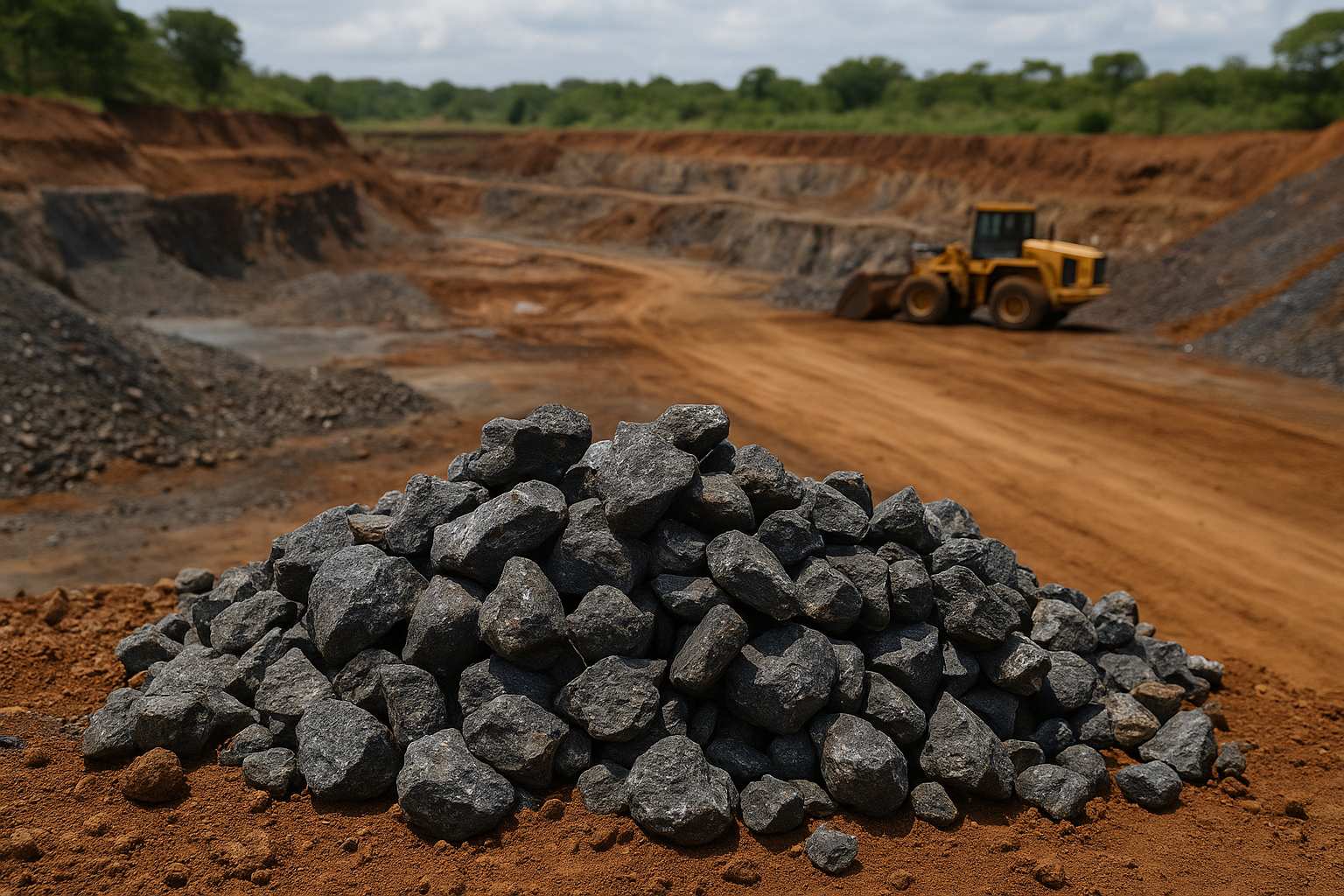
August 8, 2025 – Harare — Zimbabwe is moving toward a decisive policy shift that could reshape its role in the global chrome market. The Minerals Marketing Corporation of Zimbabwe (MMCZ) has revealed plans to engage the Ministry of Mines on a proposal for a comprehensive ban on the export of raw chrome ore, with the goal of boosting domestic mineral beneficiation.
Closing the Loopholes in the 2021 Ban
Zimbabwe has maintained a partial ban on raw chrome ore exports since 2021, allowing special export quotas to select companies under government-issued licenses. The MMCZ’s new push would eliminate these exemptions entirely, ensuring full enforcement of the Mineral Value Addition Act.
According to Dr. Nomsa Moyo, MMCZ’s General Manager, while long-term global demand for chrome ore is supported by future stainless steel capacity growth, the immediate market picture is challenging. China’s chrome stockpiles have swelled to 2.9 million tonnes, largely due to sluggish stainless steel demand, creating a supply overhang that is putting pressure on prices.
“With the current oversupply and weak downstream demand, this is the right time for Zimbabwe to take a strategic position on export policy,” Moyo stated.
Market Context and Strategic Goals
The push for a full export halt comes at a time when global chrome ore markets are facing oversupply and weak stainless steel demand, with China’s port stockpiles estimated at around 2.9 million tonnes.
By prioritizing local beneficiation, Zimbabwe aims to:
- Increase domestic ferrochrome production capacity
- Retain more value within the country’s economy
- Reduce dependency on volatile raw material exports
- Attract investment in smelting and downstream industries
Industry Reaction
While industry players acknowledge the strategic intent, concerns remain about whether local smelting capacity can fully absorb the country’s chrome ore output. Balancing beneficiation goals with sustainable production levels will be a key challenge in the years ahead.
Still, the MMCZ maintains that full value addition is the only way for Zimbabwe to secure long-term benefits from its rich mineral resources. If approved, the new measures could come into force as early as late 2025, marking one of the most significant policy shifts in the global chrome market this year.
Boost for Ferrochrome and Local Industry
The MMCZ argues that a complete ban on unprocessed exports would give local ferrochrome producers a stronger competitive edge, attracting greater investment in smelting capacity and creating more jobs within Zimbabwe’s borders.
Industry analysts note that ferrochrome sales are already expected to rise in H2 2025, supported by the commissioning of new production capacity and a stabilizing refined ferrochrome market. The policy shift could accelerate this momentum, aligning with Zimbabwe’s ambition to transform its vast mineral reserves — the second-largest chrome ore deposits in the world — into higher-value products.
If implemented later this year, the move will represent one of Zimbabwe’s most significant mining policy changes in over a decade, positioning the country as a value-addition leader in the global chrome supply chain.